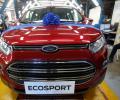
Ford, which had announced to quit the Indian market last year, said it was exploring the possibility of using one of its plants in India to produce electric cars for exports.

Consumer companies have started taking orders via phone calls and are also pushing retailers to order through their B2B applications.

Offline retailers are feeling the Omicron January chill as consumers are apprehensive about venturing out in the midst of rising Covid cases across the country. Covid restrictions, as well as concerns over the new virus variant, are seeing shoppers pull back from the high streets and shopping malls, clearly cautious about streaming into stores and choosing to self-censor instead. Offline retailers' hopes of a bumper End-Of-Season Sale (EOSS) and Republic Day (R-Day) Sale to compensate for losses over the pandemic have been dashed. Fewer trips to malls mean lower footfall and sales, resulting in higher piling of stock - and possibly higher discounts.

After a very weak December quarter and a poor year-to-date fiscal year volumes-when sales plunged to the lowest in nine years, the signs in the first 15 days of January haven't been encouraging either. "Though the severity of the current wave is not as high as the previous one, it has hit the sentiments hard impacting conversion of enquiries into sales," said Vinkesh Gulati, president, Federation of Automobile Dealers Association (FADA).

In a bad start to the new year, hotels are counting their losses again. Weddings and corporate events for this month have either been called off or postponed. The blow has throttled the nascent recovery which had kicked in around August. It is primarily hurting the banquet-driven hotel chains, some of which are seeing cancellations running into lakhs for a single day.
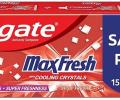
Colgate-Palmolive India (Colgate India) on Wednesday met distributors' body to sort out the issue of price parity between the traditional trade and organised distributors, which are present offline as well as online. These companies include Jiomart, Booker, Udaan and Elastic Run. Colgate India's meeting with distributors comes after the traditional channel stopped supplying its Colgate MaxFresh range of products in Maharashtra.

Expect fast-moving consumer goods makers (FMCG) to raise prices again next month owing to raw materials, transport, labour and packaging material costs remaining high or becoming even costlier. Whether it is packaged wheat flour and basmati rice or biscuits and shampoos, these products will become 2-10 per cent more expensive. Adani Wilmar will hike the price of its packaged wheat flour by 5-8 per cent and of its basmati rice by 8-10 per cent next month.

On the itinerary: Luxury camping, tribal homestays, heritage cities.

The latest hike is likely to be followed by another such move next month, said industry players. Before the latest hike, companies had initiated price hikes to the tune of 12-13 per cent in 2021 but they weren't able to fully cover the increase in costs.

'Some of the launches may get deferred due to the semiconductor shortage, which is unlikely to get resolved before the second half of 2022.'

Passenger Vehicle makers are likely to see their cumulative earnings at an operating level erode by Rs 1,800-2,000 crore in the year ending March 2022 on account of the shortage of semiconductors, rating agency Icra said at a webinar on Wednesday. The industry, it pointed out, is estimated to lose production of 500,000 units at the end of FY22 due to the chronovc shortage the chip, which is critical in safety, entertainment and the various other smart features of a car. "In absence of the chip crisis, the industry volumes are likely to have exceeded the all-time peak annual volumes." Icra has pared its growth estimates for the PV market from the earlier 10-14 per cent to 8-11 per cent now in FY22.

India's electric mobility goal, which has so far been riding on two wheels, is all set to graduate to four wheels. At least, the journey has begun. Hyundai Motor India said it would invest Rs 4,000 crore till 2028 to launch half-a-dozen electric vehicles (EVs) in India. It would eventually straddle premium and mass segments. The first of these - the electrified version of an internal combustion engine (ICE)-powered model - will go on sale as early as next year.

'We are not organising any large celebrations on New Year's Eve to avoid last-minute changes in guidelines.'

'Bharat has been leading, but it cannot carry India as the bulk of the sales come from India in terms of volume and profitability.'

For every one experienced candidate being recruited by e-two wheeler companies, 10 have no prior experience; recruitments are for skilled, low-end jobs, not for managerial or supervisory roles.

'We expect exports to touch Rs 1,000 crore by the end of the year.'
However, the government's draft policy on e-commerce companies has forced consumer companies to also adapt to the changes. For Dabur India, e-commerce channel continues to be a key driver of growth in urban India. The contribution of online sales to its entire portfolio is at six per cent compared to 1.5 per cent before the pandemic.

Black Friday sales in India received a good response as brands dropped their prices making customers queue up outside stores where discounts were steeper. Discounts were offered both online and offline. Most of the international brands in India offered discounts under the Black Friday Sale banner. The Black Friday Sale started in the US on the Friday after Thanksgiving Thursday. The day typically marks the beginning of the Christmas shopping season ahead of the festival.

'We need to encourage the next generation of farmers to continue in farming'

Tata Motors, India's third largest passenger vehicle maker, took pole position in the competitive sport utility vehicle (SUV) market in October, reveals the data from industry sources. Riding high on the Punch - the sub-compact SUV offering launched on October 18 - the Tata group flagship sold a record 23,381 units in October, higher than 20,022 units sold by archrival Mahindra & Mahindra, 18,538 units sold by Hyundai Motor India, and 15,931 units sold by Kia Motors India. Utility vehicles - that include SUVs and multipurpose vehicles - accounted for almost one in every two passenger vehicles sold in India in the first seven months of the current financial year, according to the Society of Indian Automobile Manufacturers.
 © 2025 Rediff.com - Investor Information - Advertise with us - Disclaimer - Privacy Policy - Sitemap - Feedback - About us - Terms of use - Grievances